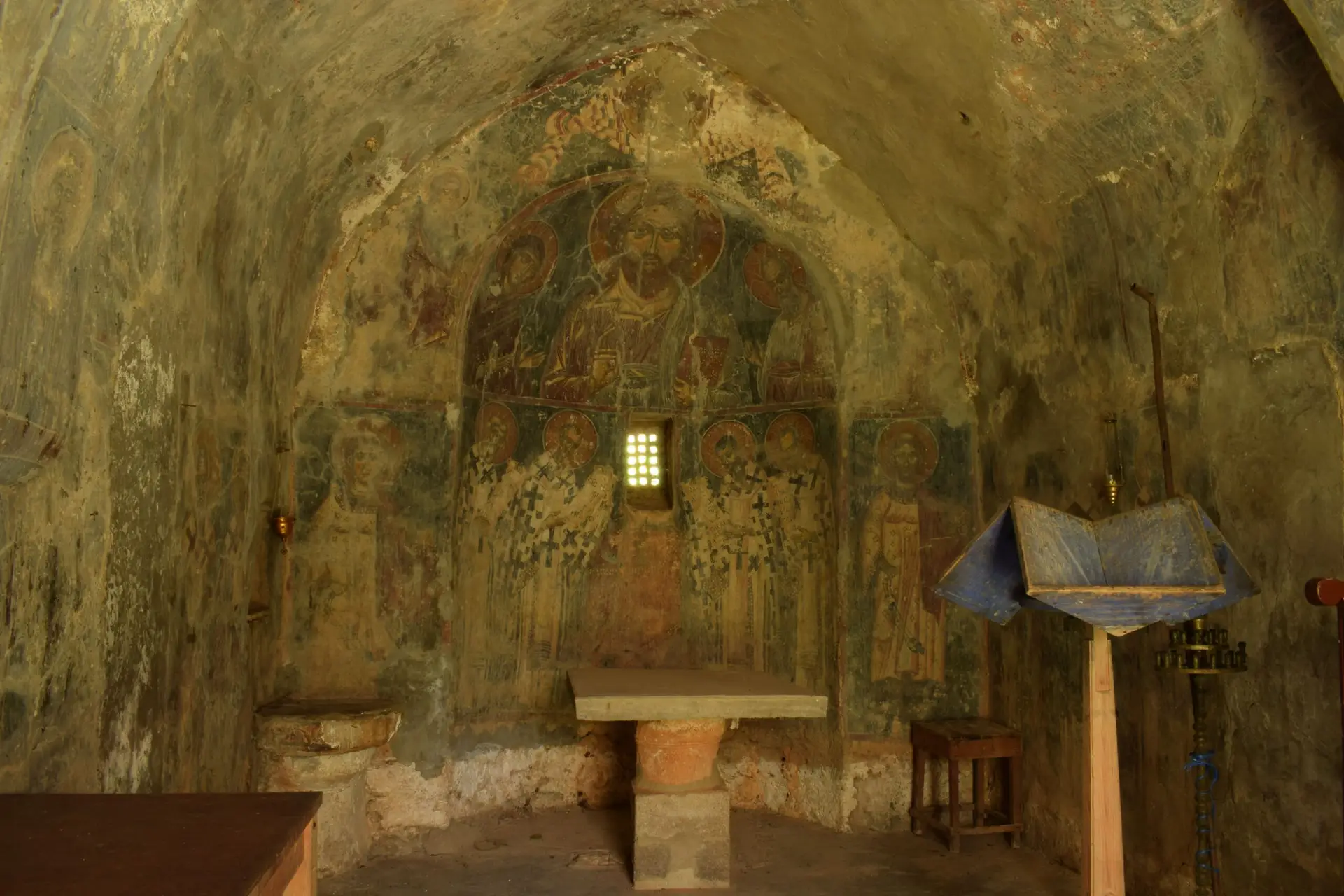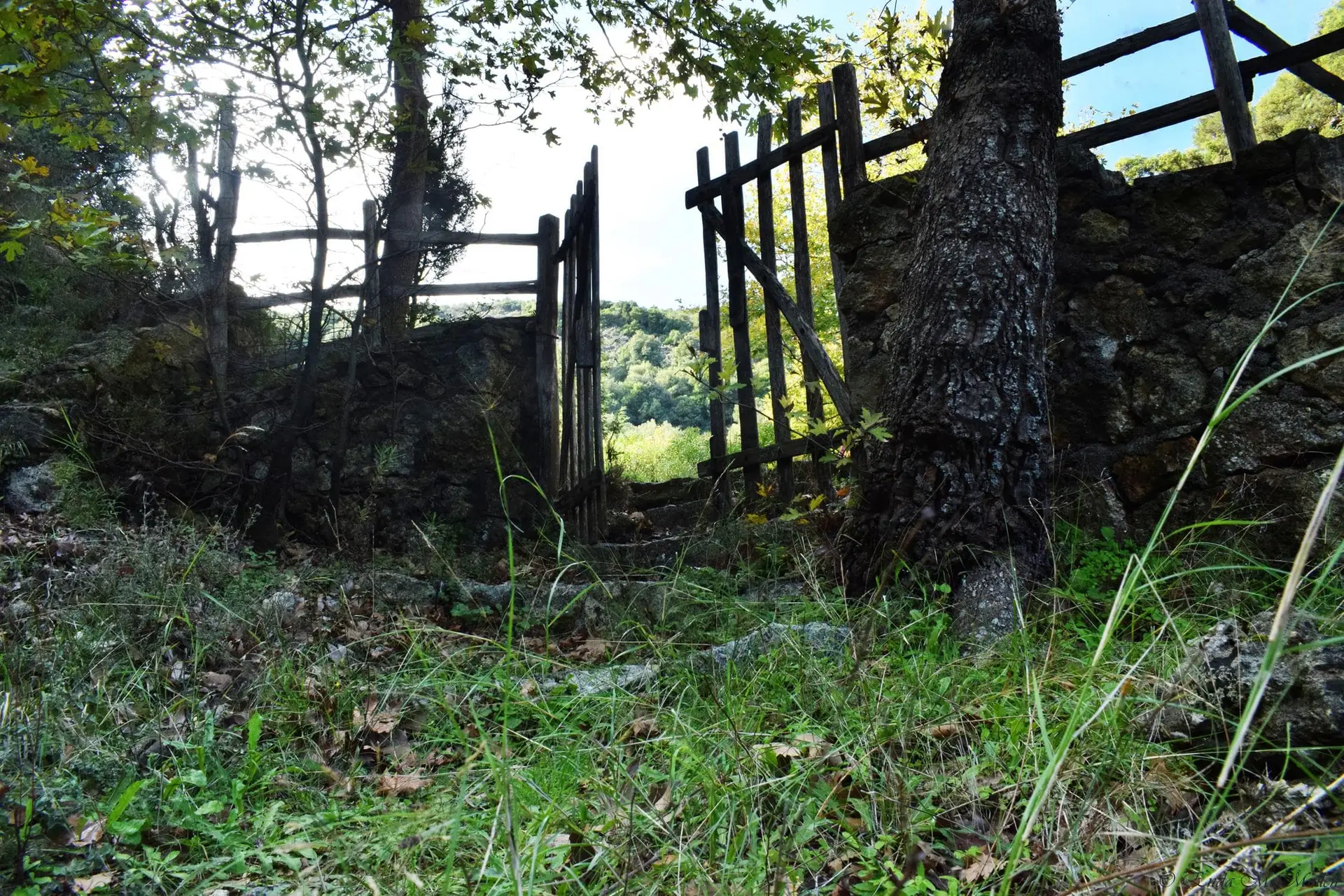

Many years ago, long before I met Anoushka, I was out walking in winter, in the foothills of the Lefka Ori with my Cretan friend Kali. We once again managed to get lost and eventually came across a small settlement with maybe 10 houses of which at least half were empty and abandoned.
An old lady, working her garden, spotted us and called us over. She was not used to seeing strangers appear in her world and invited us into her home where we were given excellent food, herbal tea and thousands of questions. The tea she served was wonderfully spicy and warmed our bodies beautifully. We asked her what it was, and were told it was “Νεροκάρδαμο” which turned out to be Nasturtium, the one with the yellow, red, and beige flowers and big round leaves.
And then she asked if we knew to story of the plant? Without waiting for an answer, she told us this wonderful story. I still thank the Gods for having my small recorder/dictaphone with me (Thank you Marijke!) and recorded her telling us the story of the creation of Nasturtium. I’ve never heard it again, never even found any reference to it anywhere. But that doesn’t take away from its beauty. Although the plant originates in South America and probably would not have been known to the ancient Greeks, a good story simply needs to be told. It’s this kind of encounters that keep us going, keep us doing what we do!
In the early age of the world, when olive groves whispered the names of minor gods and clear springs still held nymphs who had not yet grown shy of mortals, there lived a young healer named Ianthe. She was the daughter of no one remarkable—her father a potter, her mother a quiet woman who tended goats and rarely spoke above a murmur. Yet the villagers of her childhood said that when Ianthe was born, a soft breeze moved through the house though every window had been shut, and the scent of early spring flowers drifted in as if carried by unseen hands. From infancy, she seemed to belong not only to the human world but to the small, sensitive realm of green things.
Ianthe had no temple training. She had never climbed the steps to Apollo’s shrine nor learned the polished doctrines of the formal healers. Instead she wandered the edges of meadows, listening to the rustle of grasses and the small hums of life between stones. She watched how goats chose certain leaves but avoided others. She learned the softness of plants that soothed the skin, the bitterness of those that cleared the lungs, the steady quiet power of roots that grew deep enough to touch underground water. When she was old enough to leave home, she carried with her nothing more than a clay jar filled with rainwater, a satchel of herbs, and a simple devotion to the wellbeing of whoever crossed her path.
Her reputation grew slowly but firmly, like the roots of an olive tree. Villagers began to call her “the travelling spring,” for she seemed to bring renewal wherever she stopped. She returned sight to a shepherd whose eyes had been clouded by dust storms. She eased the fever of a young mother with a poultice of meadow flowers. Without asking for praise or payment, she moved from village to village, quietly walking the footpaths of Arcadia.
Yet fate has a way of placing gentle spirits at the edges of war. One summer, tension flared between two small kingdoms that bordered the region. What began as a dispute over water rights grew into raids, and raids into skirmishes, until at last the hills echoed with the clash of bronze and the cries of the wounded. The conflict was not grand enough to rouse Ares, who preferred battles of royal consequence. But for mortals—farmers, shepherds, artisans—it was devastating.

Ianthe, hearing the suffering, walked straight into the midst of it. She carried no weapon, nothing but her rainwater jar and her herbs. She moved among the fallen as quietly as a breeze that slips unnoticed through a battlefield. She tore strips of her own clothing to bind wounds, chewed bitter leaves to soften them for poultices, and sang low, wordless melodies to those on the edge of death. Her presence brought a small oasis of peace in a landscape seared by cruelty.
But even her tireless devotion could not keep pace with the destruction. Each morning when she rose from a brief rest, new casualties filled the valley beneath the two armies’ chosen ridge. Nothing seemed enough. The herbs she carried dwindled. Her hands trembled from exhaustion. Her songs cracked in her throat. On the fourth evening of her labour, with dusk settling in dusty purples over the land, she knelt beside a riverbank where reeds trembled in the fading light.
There she wept—not for the dead, who had passed beyond her reach—but for the living, whose pain weighed on her more heavily than any burden she had carried. Her tears fell quietly into the dry earth, pooling into the cracks at her knees. The clay jar of rainwater felt suddenly useless in her hands. And in that trembling moment, she cried out to any god, great or small, who might hear a mortal’s plea.
“I beg you,” she whispered into the stillness. “Give me a plant strong enough to protect these people. A plant that even the simplest farmer can grow. A plant that stands against corruption, weakness, and despair. Let it not be rare or difficult or sacred only to temples. Let it be common, generous, alive with restorative fire. Give it to the humble, and let me bear witness to its birth.”
Her words rose into the warm twilight air. But the gods were distant that night. On Mount Olympus, they feasted, laughed, and traded stories while the world below spun through cycles of suffering and renewal that rarely touched their immortal ease. Apollo polished his lyre; Artemis hunted along the mountain ridges; Athena reviewed the strategies of kings. Not one of the high gods paused long enough to hear her small, grief-laden call.
Except one.
A whisper stirred the grass beside Ianthe, gentle as the breath of a sleeping child. It was not the clear, bright voice of Apollo nor the commanding rumble of Zeus. It was the faint murmur of something older, softer, closer to the pulse of soil and seed. From the earth itself rose the presence of Chloris, the shy goddess of blossoms, herald of spring, and keeper of humble green miracles. Few mortals even recognized her name, for she rarely stepped into the affairs of men, preferring to coax new buds from branches and to cradle fragile seedlings in her invisible palms.
“I have heard you,” Chloris said softly. Her voice was like the rustle of new leaves in early morning. “You ask for something that has not yet taken form. But your compassion has stirred the hidden places of the earth. If you will give me your grief, I will give you a new plant.”
Ianthe bowed her head. “Take whatever I have. My grief, my hope, even the remnants of my strength. Only help these people.”
Chloris knelt beside her and touched the ground where the healer’s tears had fallen. A warmth spread through the soil, and the dry earth trembled as if something beneath it had drawn breath. First came a tiny swell, then a round green leaf unfurled—smooth, perfect, shaped like a warrior’s shield. Then a second leaf rose beside it, followed by a slender stem. At its tip, a bud formed, small and tightly curled. Slowly it opened, revealing a flower the colour of rekindled courage: gold like the dawn, orange like the embers of a dying fire, and streaked with the red of blood shed bravely.
“This is the herb you asked for,” Chloris said. “A plant of courage born from sorrow. Its leaves will bear the shape of shields to protect the weary. Its flowers will resemble the tattered banners that flutter above battlefields at dawn. And within its veins will flow a lively warmth, a small flame of life that will help the body resist corruption.”
Ianthe reached out and touched one of the leaves. At the lightest pressure, a bright, peppery spark raced across her tongue. It was a clean, awakening heat—nothing harsh, but alive, as though the plant carried a drop of sunlight in each cell.
“It is humble,” said Chloris, “as all true gifts must be. It will require no priestess, no oracle, no elaborate rite. It will thrive in poor soil and under harsh suns. It will grow for the shepherd, the potter, the widow, the child. Let it be used freely, not treasured as royal medicine but embraced as a companion of ordinary people.”
And with that, the goddess faded like the last breath of spring into the gathering dusk.
Ianthe carried the newborn plant in her hands as she returned to the wounded. She crushed its leaves into poultices, and the peppery warmth brought ease to festering wounds. She mixed chopped sprigs into broths for the weak, and their colour returned as though some ember had reignited inside them. Soldiers who tasted its leaves felt strength stir in their bones. They began to call it “the victory herb,” saying it held the courage of exhausted warriors.

Word of the miracle spread beyond the battlefield. Farmers planted it near their doorways. Children tucked its flowers behind their ears. Shepherds carried sprigs in their belts as protection against long nights in the hills. And because the plant grew vigorously, sprawling over walls and tumbling through gardens, it became a beloved companion of the humble.
Poets, ever eager to embellish truth, later said the round leaves were shields left behind by nameless heroes, petrified into greenery by the touch of Chloris. They claimed the fiery petals were trophies taken from the battlefield of dawn, when light wins again over darkness each day. Scholars, wanting a name, called it Tropaeolum, after tropaion—the trophy raised after victory.
But ordinary people remembered the quiet tale of Ianthe, the wandering healer whose grief blossomed into courage for all. Even generations later, grandmothers whispered that if you taste a leaf before setting out to tend the sick, your heart will not fail you. They said that planting the flower near a doorway kept despair from lingering long in the home. And they taught their children that sometimes the gods give their greatest gifts not to kings or to warriors, but to those who carry compassion through the world as simply as one carries a satchel of herbs.
Thus the bright, peppery Nasturtium came into the world—not through thunder or prophecy, but through a small, tender miracle born of kindness. A humble flame in plant form, its warmth continues to echo the gentle voice of Chloris and the steadfast hope of Ianthe, reminding all who grow it that courage sometimes blooms quietly, in poor soil, under an open sky.